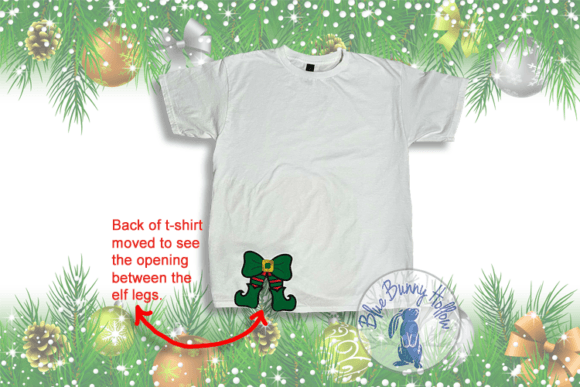
Christmas Elf Bow
First Impression: Whimsy with Purpose
Unzipping the Christmas Elf Bow embroidery file, I immediately felt that familiar spark — not just holiday cheer, but *intention*. This isn’t a cluttered jingle-bell motif or an over-rendered cartoon. It’s a clean, confident applique design built for edges: think cuff, hem, pocket flap, or the curved seam of a baby onesie. The bow has soft volume, subtle dimension in its folds, and just enough detail — a tiny knot, gentle satin-stitched loops — to read clearly at 3–4 inches wide. It lands somewhere between playful and polished: friendly enough for a toddler’s holiday romper, refined enough for a boutique apron or linen tea towel. No forced cuteness. No visual noise. Just a well-considered shape that says “Christmas” without shouting.
Where It Shines in Real Projects
Last week, I stitched Christmas Elf Bow onto a natural cotton tote bag for a local gift shop launch. Positioned low on the front right side — just above the seam — it anchored the composition without competing with hand-lettered “Joy” script above it. The applique worked beautifully over the fabric’s slight texture; the satin stitch held crisp edges, and the fill stitch beneath stayed smooth, not puffy. That’s where Christmas Elf Bow earns its keep: on structured yet breathable fabrics like medium-weight cotton, canvas, or brushed fleece. On a crewneck sweatshirt? Perfect near the sleeve cuff or bottom hem — it reads as intentional detail, not afterthought. On a baby blanket edge or pillow cover? It adds warmth and narrative without overwhelming. For Etsy sellers, this is a smart add-on: pair it with monogrammed initials or a simple “2024” for personalized holiday gifts that feel curated, not mass-produced.
What Holds Up — and What Needs Attention
As an applique design, Christmas Elf Bow relies on clean edge definition. That means stabilizer choice matters more than usual. On thin t-shirts? Use lightweight cutaway + tear-away combo — skip the heavy stuff, or you’ll get stiffness and shadowing. On stretchy knits? Hoop with light spray + stabilizer, and consider reducing top thread tension slightly to prevent puckering around the bow’s curves. Dark fabrics? Test your thread colors early — a warm cream satin stitch reads softer than stark white, and avoids haloing. And yes, check those tiny inner corners: if your machine tends to “eat” fine points, slow down the speed during those final satin-stitch turns.
It’s not ideal for ultra-small hoops (under 4" x 4") unless resized thoughtfully — the knot detail shrinks fast, losing clarity. Avoid placing it directly over thick seams or layered pockets without testing first; bulk can distort stitch registration. And while it’s charming on caps, remember the curved surface compresses width — mock it up digitally first, or stitch a sample on a cap blank to confirm proportion.
Why Customers Notice — and Remember
This isn’t just about prettiness. Christmas Elf Bow subtly elevates perceived value. A plain sweatshirt becomes *special* when finished with this kind of considered detail — it signals care, not convenience. Buyers notice the evenness of the satin stitch, the lack of thread nests, the way the applique lies flat against the grain. That builds trust: they believe it’s handmade, not rushed. For small shop owners, that translates to repeat orders and word-of-mouth. For craft fair vendors, it’s a conversation starter — “Oh, is that an elf bow? So sweet!” — which opens space for storytelling and connection. And because it’s themed but not overly literal (no red-and-green overload), it fits seamlessly into cohesive branding — say, a neutral-toned holiday collection where each item features one signature motif.
Designer Notes You’ll Actually Use
- Always test on scrap fabric first — especially with your exact stabilizer and thread combo. Applique behaves differently on cotton twill vs. French terry.
- Check stitch density visually — zoom in on the file preview. Christmas Elf Bow avoids excessive underlay, but confirm no dense clusters risk fabric distortion on delicate items like baby onesies.
- Review hoop size compatibility — if you’re using multi-position hoops or rotating frames, ensure the design fits cleanly without re-hooping mid-stitch.
- Inspect small details in black-and-white mockups — contrast reveals clarity issues faster than color. Does the knot hold up on dark fabric? Does the loop silhouette stay distinct?
- Confirm licensing before selling finished products — this is an applique design intended for commercial embroidery use, but verify usage rights for digital resale or bundling with other design assets.
- Use proper stabilizer — lightweight cutaway for knits, tear-away for stable wovens, and always match stabilizer weight to fabric drape.
A Design That Fits — Not Just Fills
Christmas Elf Bow doesn’t try to be everything. It doesn’t scream “look at me!” from a sweater chest. It sits comfortably at the edge — literally and aesthetically — adding charm without demanding attention. That restraint is rare, and valuable. Whether you’re stitching custom apparel for a client, prepping holiday inventory for your Etsy shop, or building a signature line of embroidered kitchen linens, this machine embroidery design supports your vision instead of overriding it. It’s reliable, scalable, and quietly memorable — the kind of embroidery file that makes your finished product feel intentional, joyful, and unmistakably *yours*.