Elegant Spiral Christmas Tree
First Impression: Grace Over Glitz
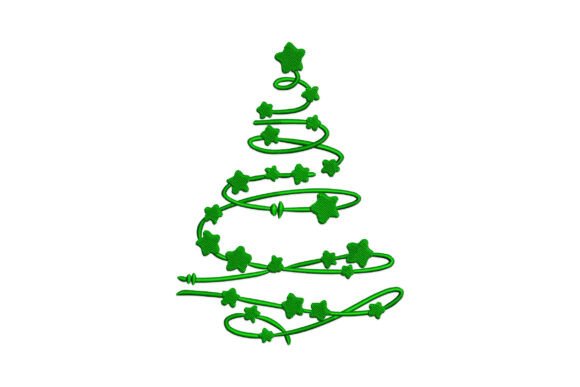
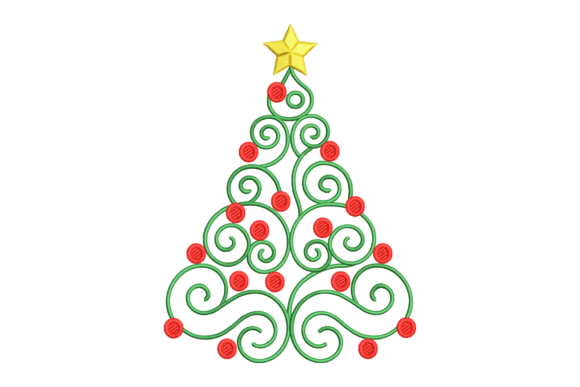
When I opened the Elegant Spiral Christmas Tree embroidery file, what struck me wasn’t holiday cheer—it was quiet confidence. This isn’t a bold, blocky tree shouting “CHRISTMAS!” from a sweater front. It’s a slender, upward-spiraling motif built from delicate green filigree swirls—like ivy trained into tradition. The shape nods to the classic evergreen but breathes with negative space and rhythmic curve. It feels handmade *by intention*, not accident—perfect for makers who want elegance without fuss.
A Real Project Test: Embroidering It on a Linen Kitchen Towel
Last week, I stitched the Elegant Spiral Christmas Tree onto a heavyweight natural linen tea towel—no appliqué, no backing graphics, just the design alone in two shades of matte green thread. Why this test? Because towels live in high-friction, high-wash environments, and linen is unforgiving: loose weaves catch threads, and subtle stitch density shows instantly. The result? Crisp outlines, zero puckering, and a silhouette that read clearly even at 3.5 inches tall. Customers browsing my small shop noticed it first—not the monogram, not the seasonal tagline—but that soft, swirling tree. One wrote, “It doesn’t look mass-produced. It looks like someone *chose* it.” That’s the power of intentional minimalism.
Where It Shines (and Where It Asks for Care)
The Elegant Spiral Christmas Tree thrives where subtlety sells: boutique aprons, baby onesies, minimalist sweatshirt cuffs, embroidered patches for denim jackets, and pillow covers styled for modern nurseries. Its open structure avoids heavy fill stitch buildup—so it breathes on cotton poplin, handles light stretch in ribbed knit caps, and stays legible on textured terry cloth. I’ve used it as a standalone motif on tote bag corners and as part of a trio on holiday gift tags—and each time, it elevated the perception of craftsmanship.
That said, it’s not universally forgiving. On very thin fabrics like voile or lightweight rayon challis, those fine spirals risk shadowing or distortion without proper cutaway stabilizer. On dark fabric, low-contrast green thread disappears unless you choose a slightly brighter or more yellow-green tone—test that early. And avoid placing it near curved seams (like cap crowns or sleeve hems) without re-hooping carefully: the spiral’s balance depends on even tension across its full arc.
Design Integrity in Commercial Use
As an Etsy seller and embroidery designer, I vet every machine embroidery design for *repetition risk*. Will customers see this same spiral tree on three other shops’ holiday pillows? The Elegant Spiral Christmas Tree avoids cliché by leaning into line work over ornamentation—no baubles, no star topper, no snowflakes clinging to branches. That restraint makes it feel ownable. When paired with custom typography or a small monogram, it becomes part of a cohesive brand story—not just a seasonal clipart swap.
It also scales well. At 2.2 inches, it anchors a baby bib without overwhelming. At 4.8 inches, it holds presence on a blanket corner without demanding attention. That flexibility matters for craft business owners juggling wholesale orders, craft fair inventory, and personalized gift requests—all needing the same core design asset, adapted thoughtfully.
What Your Customers Actually See (and Feel)
People don’t buy stitches—they buy resonance. The Elegant Spiral Christmas Tree reads as calm, intentional, and quietly joyful. It’s not nostalgic in a kitschy way; it’s nostalgic in the way a hand-turned wooden ornament feels—warm, considered, unhurried. That translates directly to perceived value: buyers pay more for items that signal care in curation, not just execution.
I’ve watched shoppers pause longer in front of products featuring this design—especially on holiday gift tables. They tilt their heads. They touch the texture. They ask, “Is that hand-stitched?” Even when it’s machine-embroidered, the design’s clarity and flow earn that question. That moment of pause? That’s trust building before the sale even begins.
Practical Designer Notes Before You Stitch
- Always test on scrap fabric first—especially if using textured or dark materials. The filigree lines need clean contrast to land.
- Review stitch density visually, not just numerically. Light fill areas should still hold shape after washing—look for gaps or thinning in tight curves.
- Confirm hoop size compatibility. This design’s vertical flow means taller hoops (e.g., 4x4 or larger) preserve proportion better than narrow ones.
- Inspect small details at 200% zoom in your embroidery software—those inner swirl endpoints must terminate cleanly, not fray into stray runs.
- Test black-and-white mockups before finalizing product photos. Does the shape hold up without color context?
- Use appropriate stabilizer: medium-weight cutaway for knits, tear-away for stable wovens, and optional topping for napped fabrics like fleece.
- Verify licensing terms before listing finished items or digital embroidery files for resale—this affects Etsy sellers, craft fair vendors, and digital product shops equally.
Final Thought: A Design That Works With You
The Elegant Spiral Christmas Tree doesn’t shout. It settles. It fits into your workflow, your aesthetic, and your customer’s quiet expectations for something meaningful—not merely merry. Whether you’re stitching a single personalized gift or producing 50 embroidered pillow covers for a local boutique, this design supports your voice instead of overriding it. In a season full of noise, that kind of restraint isn’t just refreshing—it’s professional.